Industrial noise pollution is a persistent issue that affects both workers' health and the surrounding environment. Many industrial facilities are constantly seeking effective ways to mitigate noise. One solution that often comes into consideration is the use of industrial steel fences. As a leading supplier of industrial steel fences, I am frequently asked whether these fences can block noise. In this blog post, I will delve into the science behind noise blocking, the effectiveness of industrial steel fences in this regard, and the factors that influence their performance.
Understanding Noise and Its Propagation
Before we can assess the ability of industrial steel fences to block noise, it's essential to understand how noise is generated and how it travels. Noise is essentially a form of sound energy that propagates through the air in the form of waves. These waves are characterized by their frequency (pitch) and amplitude (loudness). When a sound source, such as a machine or a vehicle, emits noise, the sound waves spread out in all directions.
The propagation of noise is influenced by several factors, including the distance from the source, the presence of obstacles, and the characteristics of the medium through which the sound waves travel. As sound waves encounter an obstacle, they can be reflected, absorbed, or transmitted through the material. The effectiveness of an obstacle in blocking noise depends on its ability to reflect and absorb sound energy rather than allowing it to pass through.
How Industrial Steel Fences Can Block Noise
Industrial steel fences can play a role in reducing noise levels through a combination of reflection and absorption. The solid structure of steel fences provides a physical barrier that can reflect a significant portion of the sound waves back towards the source. This reflection reduces the amount of sound energy that reaches the other side of the fence.
In addition to reflection, some industrial steel fences are designed with features that enhance sound absorption. For example, fences can be lined with sound-absorbing materials such as acoustic foam or fiberglass insulation. These materials work by converting the sound energy into heat energy, thereby reducing the intensity of the sound waves that pass through the fence.


Factors Affecting the Noise-Blocking Performance of Industrial Steel Fences
The effectiveness of industrial steel fences in blocking noise depends on several factors, including the following:
- Fence Height: Generally, taller fences are more effective at blocking noise than shorter ones. A taller fence provides a larger barrier that can intercept and reflect more sound waves. As a rule of thumb, increasing the height of a fence by one meter can result in a reduction of noise levels by approximately 1.5 to 3 decibels (dB) at a distance of 10 meters from the fence.
- Fence Density: The density of the fence also plays a crucial role in its noise-blocking performance. A solid fence with few gaps or openings is more effective at blocking noise than a fence with a lot of holes or spaces. This is because gaps in the fence allow sound waves to pass through, reducing the overall effectiveness of the barrier.
- Material Thickness: The thickness of the steel used in the fence can also impact its ability to block noise. Thicker steel provides a more substantial barrier that can reflect and absorb more sound energy. However, increasing the thickness of the steel also increases the cost and weight of the fence, so a balance needs to be struck between noise-blocking performance and practical considerations.
- Distance from the Noise Source: The distance between the fence and the noise source can affect the amount of noise reduction achieved. Generally, the closer the fence is to the noise source, the more effective it will be at blocking noise. This is because the sound waves have less distance to spread out before they encounter the fence, increasing the likelihood of reflection and absorption.
- Frequency of the Noise: Different frequencies of noise are affected differently by industrial steel fences. High-frequency noise (above 2000 Hz) is generally easier to block than low-frequency noise (below 500 Hz). This is because high-frequency sound waves have shorter wavelengths and are more easily reflected and absorbed by the fence. Low-frequency sound waves, on the other hand, have longer wavelengths and can more easily diffract around the fence, reducing its effectiveness.
Types of Industrial Steel Fences and Their Noise-Blocking Capabilities
As an industrial steel fence supplier, I offer a variety of fence types, each with its own noise-blocking capabilities. Here are some of the most common types of industrial steel fences and how they can help reduce noise:
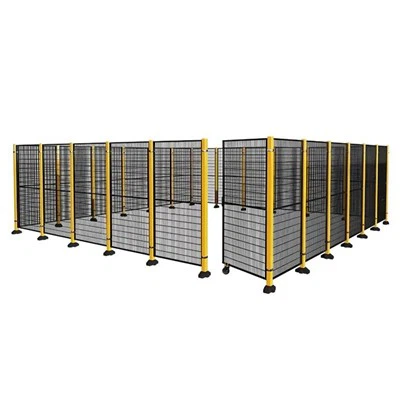
- Workshop Isolation Fence: These fences are designed to provide a physical barrier between different areas within a workshop or industrial facility. They are typically made of steel wire mesh or solid steel panels and can be effective at blocking noise, especially if they are installed close to the noise source.
- Electric Security FRP Fence: These fences are made of fiberglass-reinforced plastic (FRP) and are often used in security applications. While they are primarily designed for security purposes, they can also provide some noise reduction due to the solid structure of the FRP material.
- 358 Anti Climbing Fence: These fences are characterized by their small mesh size, which makes them difficult to climb. The small mesh size also helps to block noise by reducing the amount of sound that can pass through the fence.
Real-World Applications and Case Studies
To illustrate the effectiveness of industrial steel fences in blocking noise, let's look at some real-world applications and case studies.
- Manufacturing Plant: A large manufacturing plant was experiencing high levels of noise pollution from its machinery, which was affecting the health and productivity of its workers. The plant installed a series of industrial steel fences around the perimeter of the machinery area. The fences were designed to be tall and solid, with a thickness of 3 mm. After the installation of the fences, the noise levels in the surrounding areas were reduced by an average of 10 dB, which was a significant improvement.
- Construction Site: A construction site was located in a residential area, and the noise from the construction activities was causing complaints from the local residents. The construction company installed a temporary industrial steel fence around the perimeter of the site. The fence was made of steel wire mesh and was lined with acoustic foam. The noise levels in the surrounding residential area were reduced by approximately 8 dB, which helped to minimize the impact on the residents.
Conclusion and Call to Action
In conclusion, industrial steel fences can be an effective solution for blocking noise in industrial settings. By reflecting and absorbing sound energy, these fences can help to reduce noise levels and create a more comfortable and productive environment for workers. However, the effectiveness of industrial steel fences in blocking noise depends on several factors, including fence height, density, material thickness, distance from the noise source, and the frequency of the noise.
As an experienced industrial steel fence supplier, I can help you choose the right type of fence for your specific noise-blocking needs. Whether you need a Workshop Isolation Fence, an Electric Security FRP Fence, or a 358 Anti Climbing Fence, I have the expertise and products to meet your requirements.
If you are interested in learning more about our industrial steel fences and how they can help you block noise, please contact us today to discuss your needs and get a free quote. Our team of experts is ready to assist you in finding the best solution for your industrial noise reduction needs.
References
- Beranek, Leo L., and Irvine, John D. (1992). Noise and Vibration Control Engineering. Wiley-Interscience.
- Kryter, Karl D. (1994). The Handbook of Noise Control. CRC Press.
- Patton, Robert T., and Zorumski, William E. (1996). Aircraft Noise. AIAA Education Series.