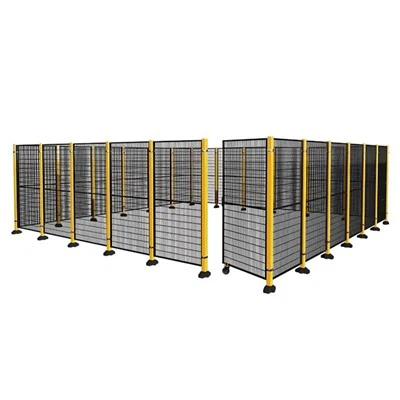
From the perspectives of facility maintenance and commercial value enhancement, tennis court fencing is not merely a protective barrier but a crucial asset that impacts both operating costs and court revenue.
1. Routine Maintenance: Preventing Deformation and Rust
Tension Adjustment: Fencing behind the baseline is frequently subjected to the impact of powerful shots, making it prone to localized sagging. Periodically re-tensioning the mesh prevents the structure from collapsing.
Coating Repair: Once the PVC coating is scratched, the internal steel wire becomes highly susceptible to rust from rain or salt spray. Any damage should be immediately sealed with professional-grade outdoor adhesive.
Structural Stability: Regularly inspect the connection points between the fence posts and the concrete base for cracks to prevent the posts from leaning during windy seasons.
2. Proper Windscreen Installation: Prioritizing Structural Integrity
While windscreens provide wind protection and privacy, they create significant wind resistance; improper installation can lead to the fencing being blown over.
Airflow Design: Windscreens must feature "air release vents" and maintain an airflow permeability rate of 15%–30%; never use completely airtight canvas.
Safety Fasteners: Use breakable plastic zip ties instead of wire to secure the windscreen. In the event of extreme winds, the ties will snap, allowing the screen to detach and protecting the expensive metal framework from damage.
3. Commercial Monetization: A Multifunctional Platform
Advertising Sponsorship: Windscreens serve as ideal canvases for high-definition printed graphics; displaying custom sponsor logos can generate long-term advertising revenue for the club.
Smart Integration: Modern smart courts often integrate AI cameras and live-streaming equipment directly onto the tops of the fence posts; therefore, initial construction should include waterproof conduits within the posts for cabling.
Space Optimization: Maximize the utility of the court area by mounting player benches, storage hooks, or ball hopper racks directly onto the fencing framework.