As a supplier of airport security fences, I've often been asked whether our products can be used in military airports. This is a question that combines technical, security, and regulatory aspects. In this blog, I'll explore the viability of using airport security fences in military airports from multiple perspectives.
Technical Suitability
Airport security fences are designed to meet high - standards of durability, strength, and security. They are typically made from high - quality materials such as galvanized steel or aluminum alloy, which can withstand harsh environmental conditions, including strong winds, heavy rain, and extreme temperatures. These materials also offer corrosion resistance, ensuring a long service life.
Military airports, like civilian airports, require fences that can effectively prevent unauthorized access. The technical features of airport security fences, such as their height, mesh size, and anti - climbing design, are well - suited for this purpose. For example, a standard airport security fence may have a height of 2.4 to 3 meters, which is sufficient to deter most intruders. The mesh size is usually small enough to prevent people from squeezing through or using tools to cut the fence easily.
Moreover, airport security fences often come with additional security features, such as barbed wire or anti - tamper devices. These features can be further enhanced for military applications. For instance, some military airports may require fences with electrified wires to provide an extra layer of security. Our company can customize the fences according to the specific requirements of military airports, ensuring that they meet the highest security standards.
Security Requirements
Military airports have unique security requirements compared to civilian airports. They often house sensitive military equipment, aircraft, and personnel, and therefore need to have a higher level of security. Airport security fences can be adapted to meet these requirements.
One of the key security aspects is surveillance. Airport security fences can be integrated with surveillance systems, such as CCTV cameras and motion sensors. These systems can detect any unauthorized movement along the fence line and alert the security personnel immediately. In military airports, the surveillance requirements may be even more stringent. Our company can provide fences that are compatible with advanced surveillance technologies, such as thermal imaging cameras and radar systems, to ensure comprehensive security.
Another important security consideration is access control. Military airports need to have strict access control measures to ensure that only authorized personnel can enter the premises. Airport security fences can be equipped with access control systems, such as card readers, biometric scanners, and gates. These systems can be programmed to allow access only to specific individuals or groups, providing a high level of security.
Regulatory and Legal Considerations
When considering using airport security fences in military airports, it's important to take into account the regulatory and legal requirements. Military airports are subject to strict regulations and security protocols, which may vary from country to country.
In some countries, military airports may have specific standards for the design and installation of security fences. These standards may include requirements for the height, strength, and security features of the fences. Our company is well - aware of these regulations and can ensure that our products meet all the necessary requirements.
We also understand the importance of compliance with international security standards. For example, the International Civil Aviation Organization (ICAO) has set out guidelines for airport security, which can also be applied to military airports. By adhering to these standards, we can provide military airports with high - quality security fences that are both effective and compliant.
Cost - effectiveness
Cost is always an important factor in any project. Airport security fences are generally cost - effective solutions for both civilian and military airports. They offer a long - term investment, as they require minimal maintenance and have a long service life.


Compared to other security measures, such as guard patrols or surveillance systems, airport security fences are relatively inexpensive. They can provide a physical barrier that deters intruders and reduces the need for constant monitoring. In military airports, where large areas need to be secured, the cost - effectiveness of airport security fences becomes even more significant.
Related Products
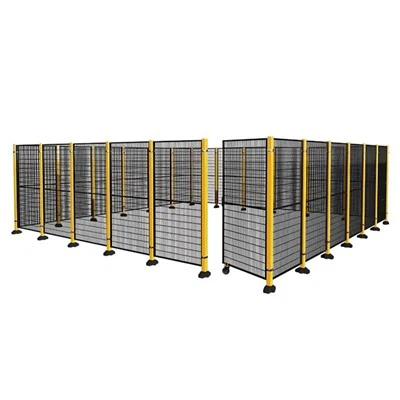
In addition to airport security fences, our company also offers a range of related products that can enhance the security of military airports. For example, Workshop Isolation Fence can be used to separate different areas within the airport, such as workshops and storage areas. These fences can provide an additional layer of security and organization.
Fall Protection Safety Rail is another important product. It can be installed along the edges of runways, hangars, and other elevated areas to prevent falls and ensure the safety of personnel.
Industrial Steel Fence is a durable and strong option that can be used for perimeter security. It can withstand heavy impacts and provide a high level of protection.
Conclusion
In conclusion, airport security fences can be effectively used in military airports. They offer technical suitability, meet security requirements, comply with regulatory standards, and are cost - effective. Our company, as a supplier of airport security fences, is committed to providing high - quality products and services to military airports.
If you are interested in our airport security fences or related products for your military airport, we invite you to contact us for further information and to discuss your specific requirements. We look forward to working with you to enhance the security of your military airport.
References
- International Civil Aviation Organization (ICAO). Airport Security Manual.
- Various military security regulations and standards from different countries.